From Single Stroke to Scalable Library: The Anatomy of a Floral Vector Pack
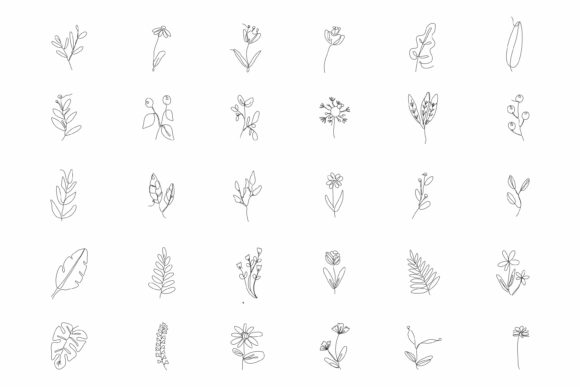
When a designer, marketer, or content creator downloads a digital asset pack, it often represents a starting point. The promise isn't just in the individual files, but in the cohesive language they speak. A resource titled something like "30 Line Continuous Art of Floral Vector and Big pack of vector Hand-drawn line continuous art doodle floral elements" communicates a specific design ethos. This is a collection built on the principle of the unbroken line, a style where form emerges from a single, flowing stroke without a clear beginning or end. The technique creates a sense of organic movement and elegant simplicity.
Decoding the Format List: PNG, JPG, SVG, EPS
Understanding the included file types is crucial for practical application, as each serves a distinct purpose within a project workflow. The typical offering of 30 PNG, 30 JPG, 30 SVG, and 30 EPS files represents a thoughtful multi-format approach.
PNG and JPG files are raster formats. They are pixel-based and come with a fixed resolution. For the 30 PNG files in such a pack, their primary strength lies in transparency support. This makes them exceptionally useful for direct placement onto varied backgrounds in social media posts, website banners, or printed materials where no background editing is desired. The 30 JPG files, while lacking transparency, are universally compatible and often slightly smaller in file size, suitable for quick drafts or environments where format restrictions exist.
The true vector power, however, resides in the 30 SVG and 30 EPS files. These are the editable and scalable formats. An SVG file is a web-native vector format based on XML code. It is infinitely scalable without quality loss and can be directly embedded into web code, edited with CSS, or manipulated in most modern design software. The 30 EPS files represent a more traditional, robust vector format, highly reliable for professional print workflows and complex editing in advanced graphic applications. The presence of both ensures the floral elements can transition seamlessly from a web icon to a large-scale print poster.
The Continuous Line Style in Botanical Illustration
The artistic choice of "hand-drawn line continuous art" for floral and plant subjects is particularly resonant. This style distills the complexity of nature into a graceful, minimalist outline. It captures the essence of a petal's curve or a leaf's vein with a single, confident stroke. In a pack containing 30 such elements, variety is key. One might depict a daisy with a spiraling center, another a rose where the stem, bud, and bloom are one uninterrupted line. This uniformity of style creates a visual library that feels harmonious, allowing different elements from the set to be combined without stylistic clash.
For a spring and summer theme, this line art approach often favors open, airy shapes. Doodle-style wisps of grass, unfurling fern leaves, and blossoming flowers with minimal internal detail evoke the lightness of the seasons. The outline style avoids heavy fills or shadows, keeping the imagery bright and adaptable, perfectly aligning with the clean, fresh aesthetic often sought for seasonal campaigns and content.
Practical Applications Across Professional Fields
The utility of such a vector pack extends far beyond a single project type. Its scalability and format range invite use across diverse mediums.
Digital Branding and Social Media
For businesses and content creators, these elements become quick-to-deploy brand accents. The scalable SVG files can be resized to become social media highlight story cover icons without any pixelation. A consistent floral icon set can visually theme a series of Instagram story highlights for a boutique, a wellness coach, or a gardening blog. The PNGs with transparent backgrounds allow for overlay on photos or video content. The editable nature means colors can be changed to match brand palettes for different campaigns, ensuring the core asset remains consistent while its presentation adapts.
Educational and Publishing Resources
Educators and researchers in fields like botany, environmental science, or art can utilize these vectors as clear, reproducible illustrations. The line art style avoids photographic realism, focusing on form, which can be beneficial for instructional diagrams or textbook graphics. Because the files are editable, an educator can simplify a complex flower from the set for a younger audience or combine several elements to create a custom habitat illustration. The EPS format's reliability in high-quality printing makes it suitable for academic posters or journal layouts.
Product Design and Physical Merchandise
The scalability of the vector files unlocks applications in physical product creation. A single floral element from the EPS library can be enlarged to become the full artwork for a t-shirt, tote bag, or wall decal without any loss of line sharpness. For a hobbyist or small business owner, this allows for a unified design language across a product line—the same continuous line rose might appear on a logo, a website button, and an embroidered cap, all derived from the same original SVG or EPS file.
Characteristics and Advantages of a Comprehensive Pack
Owning a complete set, rather than sourcing individual elements, offers significant workflow advantages.
The primary characteristic is internal consistency. Every flower, leaf, or branch shares the same hand-drawn, continuous line aesthetic. This eliminates the time-consuming task of stylistically unifying disparate assets from different sources. A user can confidently mix and match any elements from the 30 files knowing they will visually cohere.
A major advantage is the editable and scalable nature of the core vector files. This is not a static set of pictures. It is a design toolkit. A line weight can be thickened for a bold poster or thinned for a delicate watermark. Colors can be swapped instantly to match seasonal themes—from pastel springs to vibrant summers. Shapes can be broken apart (even continuous line art can often be edited as paths) and recombined to form new, custom botanical arrangements.
The volume—30 distinct elements—provides a foundation for creative repetition without monotony. In branding, repeating a visual motif builds recognition. With 30 variations on floral line art, a brand can use a different, yet stylistically identical, flower for each month or product category, maintaining a fresh feel while reinforcing a core design identity.
Considerations for Effective Use
While versatile, such packs require mindful application. The continuous line style, being minimalist, may not suit contexts requiring detailed botanical accuracy or high emotional intensity. Its strength is in elegance and suggestion.
Users should also consider the balance between uniformity and customization. While the set is consistent, overusing every element in the same way can lead to a generic look. The true power is unlocked when these assets are edited, colored, and combined with other original work to create something unique. The pack is a vocabulary, not a finished sentence.
Finally, understanding file format choice is essential. Using a PNG for a large-format print job will result in blurry pixels. Using a complex EPS for a tiny web icon might add unnecessary file weight. Selecting the correct file from the available 30 PNG, JPG, SVG, and EPS options for the specific task is a key part of the professional process.
The Vector as a Dynamic Design Component
Ultimately, a pack of hand-drawn line continuous art floral elements transcends being just a collection of images. It represents a flexible design system. Each of the 30 SVG or EPS files is a component that can be manipulated, a building block for digital and physical spaces. For the social media manager, it provides instantly recognizable icons. For the web designer, it offers scalable, performance-friendly graphics. For the product designer, it supplies print-ready artwork. The spring and summer theme captured in outline style evokes a timeless, seasonal lightness, but through editing, these vectors can be adapted to any color scheme or mood, proving that even the simplest single stroke, when thoughtfully crafted and provided in a comprehensive, multi-format library, can become a cornerstone for a wide spectrum of creative expression.